FFXIV Visual Codex
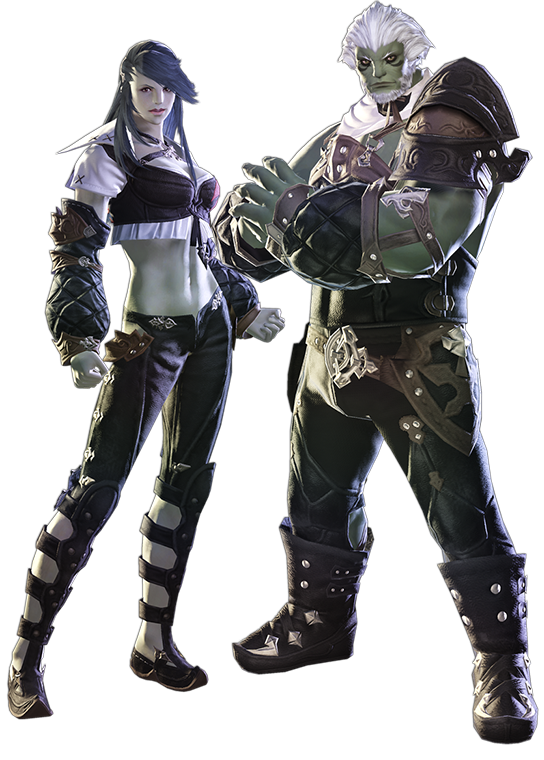
Hyur
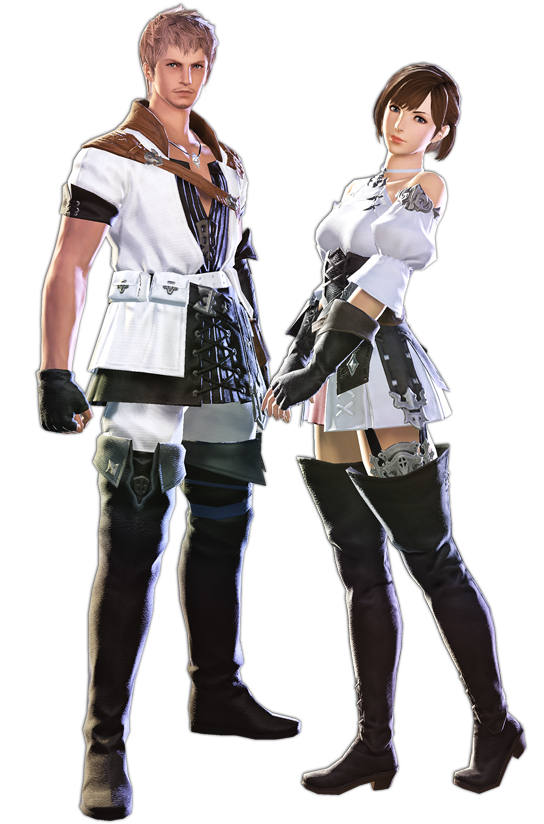
Over the course of some one thousand years and three great migratory waves, the Hyur have come to be the most populous of the civilized races in Eorzea. Compared to the others, theirs is an average physique, both in terms of height and build. The Hyur champion personal freedom and liberty, and their espousal of an eclectic variety of languages and traditions is a legacy of their diverse heritage―as is their resulting lack of a unified cultural identity.
Midlander
The Midlander clan comprises over half of the total population of Eorzean Hyur. They have established themselves throughout every city in the realm and lead lives as diverse as their heritage, though they are marginally more common and prominent in Gridania than elsewhere (partly because most or all of the Padjal are born from Midlander families). Trained in letters from infancy, the Midlanders are generally more educated than many of the other races and clans.
Highlander
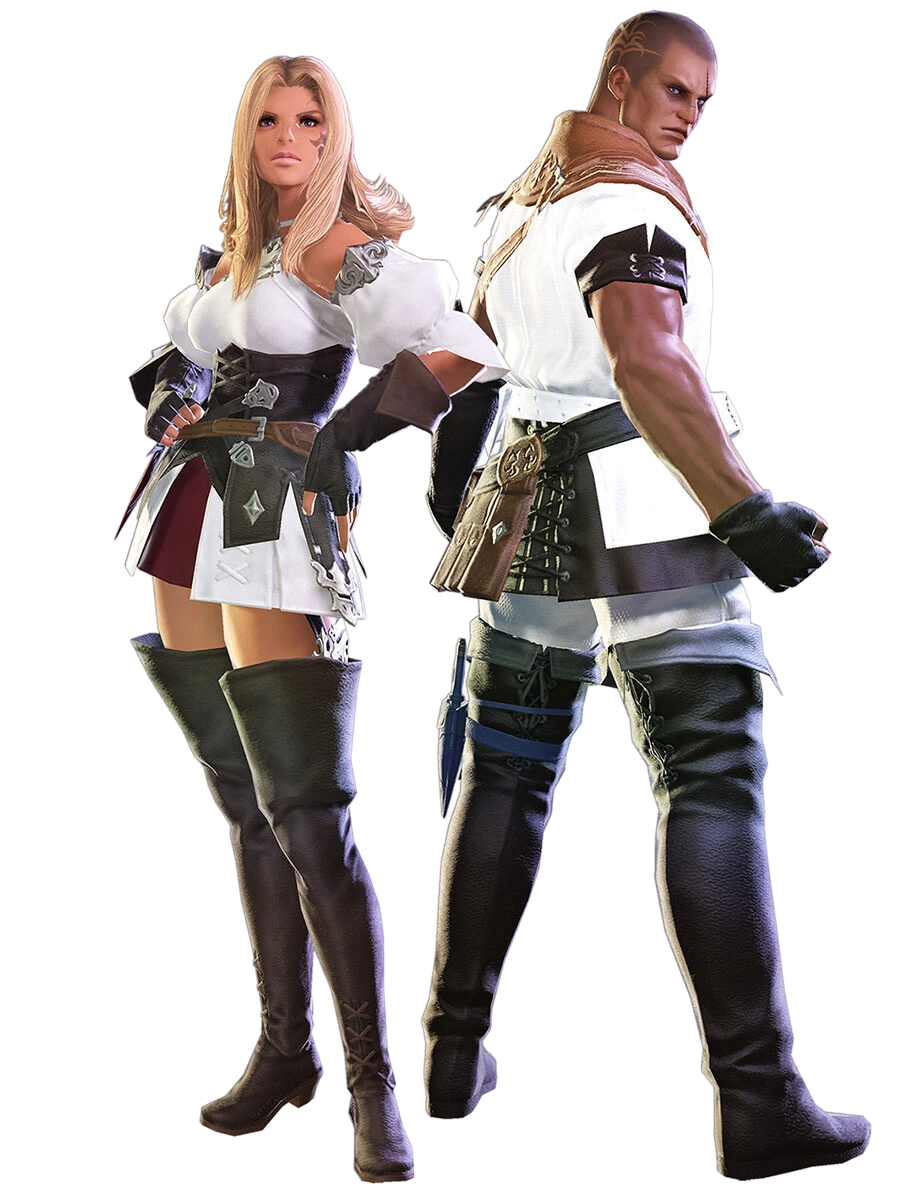
The Highlanders have a long tradition of inhabiting Eorzean mountainous regions, particularly Gyr Abania and its proud city-state of Ala Mhigo. Compared to their Midland brethren, the Highlanders are larger in build. Although Highlanders were originally common in Ala Mhigo, the state's conquest by the Garlean Empire has driven them all across Eorzea in great waves of refugees. The largest number of them is found in and around Ul'dah, as the refugees were attracted by tales of Ul'dahn wealth, only to learn of the ruthless Dunesfolk business practices. Many are now found on the streets of Ul'dah, huddled outside its walls or in the refugee camp referred to (some would say mockingly) as "Little Ala Mhigo". However, the great Highlander diaspora did not just send them to Ul'dah and they can be found more or less everywhere across Eorzea.
Elezen
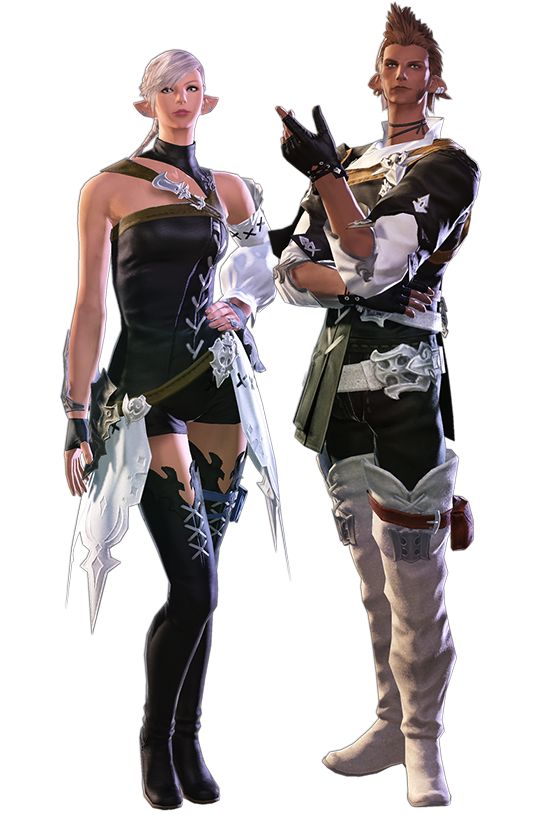
The Elezen are a characteristically tall people, long of limb and slender of build. They are also possessed of a somewhat extended lifespan in comparison to the Hyur. The Elezen once claimed sole dominion over Eorzea, their presence predating that of the other races, and, as such, developed a heightened sense of honor and pride. In years past, the Hyur migration into Elezen lands sparked bitter conflict. At present, however, the mutual understanding reached between the two races allows them to work towards mutual peace and prosperity.
Wildwood
For eons, the Wildwood Elezen have lived in the safety of Eorzea's lush forests. They have an excellent sense of sight—a contributing factor in their unparalleled expertise as archers. With the formation of the realm's governments, many Wildwood were drawn either to the exhilarating cosmopolitanism of the urban centers or the simple nomadism of the plains. The other great population of "Wildwood" Elezen is to be found in Ishgard, but long decades of ceaseless warfare with the Dravanian Horde, the intensity of the faith of the Church of Halone, and most recently, the years of bitter cold and snow have made the Elezen of Ishgard culturally distinct from their other Wildwood cousins.
Duskwight
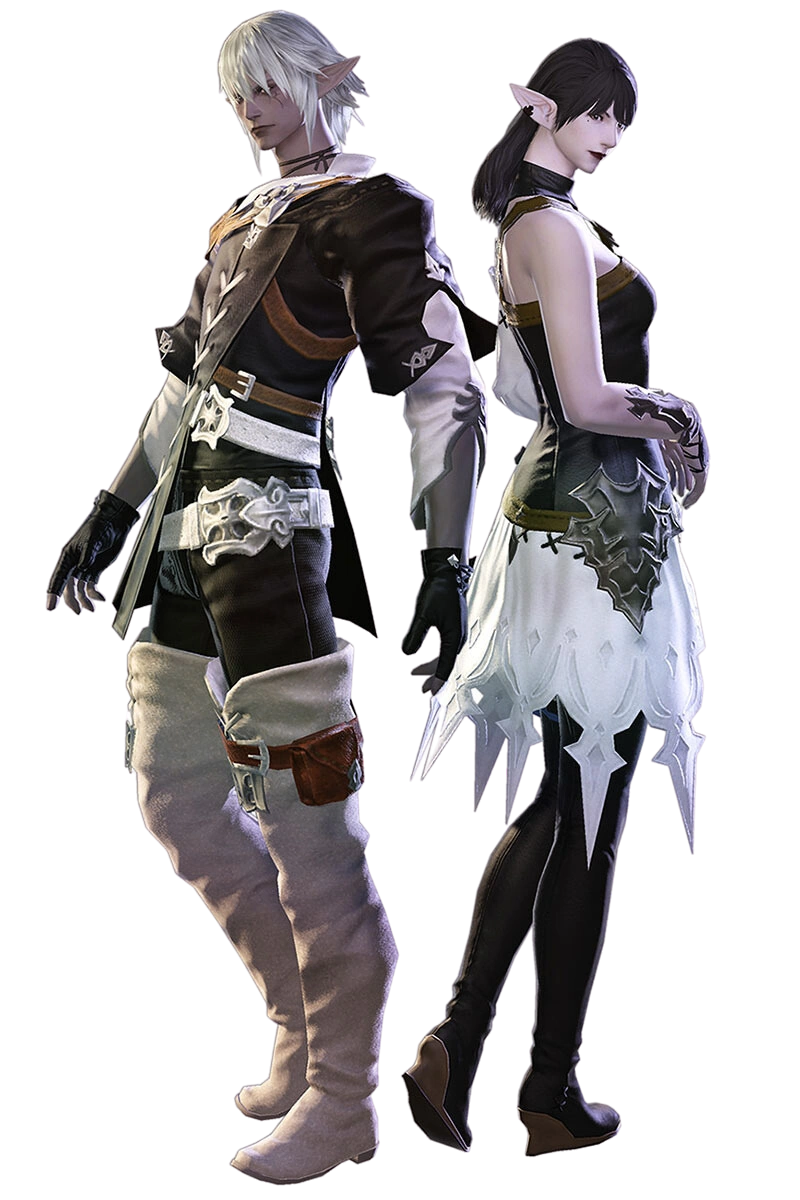
The Duskwight Elezen have spent centuries in the peace and seclusion of Eorzea's caves and caverns. They have developed an acute sense of hearing, capable of detecting the faintest of sound. The uncanny awareness this grants has proven advantageous in the field of hand-to-hand combat. Many of the reclusive Duskwight resort to robbery and pillaging to survive, earning them the scorn of their woodland relatives.
Lalafell
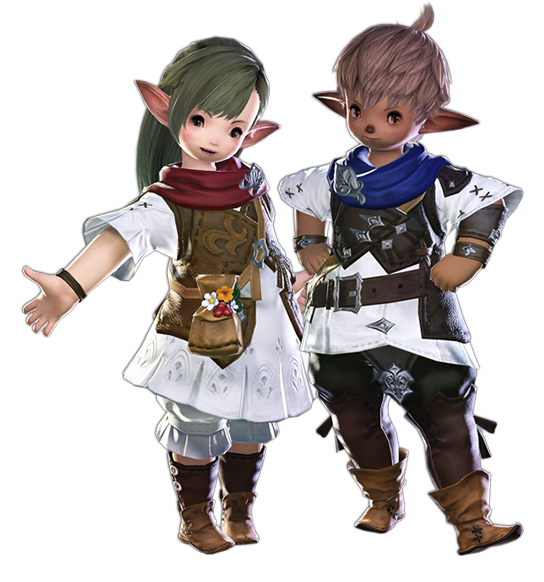
The Lalafell are a folk both rotund and diminutive. Small by any race's standards and possessed of a childlike countenance, it proves difficult for non-Lalafell to gauge an individual's age with any degree of accuracy. Originally an agricultural people inhabiting the fertile islands of the south seas, they found their way to Eorzea via the burgeoning trade routes. Lalafell are welcoming of outsiders, and share prosperous relations with all of the other races of Eorzea.
Plainsfolk
The flat landscapes of the Plainsfolk's home islands are dotted with the clan's traditional thatched huts, beneath which lie intricate networks of underground passageways. Their distinct hair coloration—a myriad of earthy and grassy tones—mimics their native environment and their long, pointy ears are said to be able to detect the faintest scampering of the prairie's various fauna. Their skin tones tend generally toward the fairer, lighter side of the spectrum, though as with many races, this is not universal. This inclination toward grasslands and plains naturally led the bulk of Eorzea's Plainsfolk to Vylbrand's wide meadows; it has been strongly implied that they made up a major portion, perhaps the majority, of the population of Nym, and even today, the greater majority of Plainsfolk can be found in and around Limsa Lominsa. They are somewhat more diasporized than the Dunesfolk, though, and some Plainsfolk can be found in nearly every corner of the land, from North Shroud to the southern tip of Thanalan, with quite a few to be found in Ul'dah. The sole exception is Ishgard—due to the general Lalafellin dislike for cold, outside of the adventuring cadre, it is rare indeed to encounter them anywhere in Coerthas, especially today.
Dunesfolk

Perhaps the most distinctive aspect of Dunesfolk culture is its traditional dwellings—structures affixed to the backs of large beasts of burden. The luminous eyes of the Dunesfolk are the result of a glossy, protective layer that covers the pupil, an evolutionary response to the glaring sunlight of their home region. Many individuals wear a small gemstone on their forehead, representing their zodiacal sign. Dunesfolk have a particularly wide variation in skin tone - while many tend toward the darker side of the spectrum (as they live in a desert), several Dunesfolk, such as Nanamo Ul Namo, are among the fairest-skinned individuals in Eorzea. While the traditional dwelling of the Dunesfolk is on beasts of burden, the Dunesfolk are also the founders of the city of Ul'dah. The vast majority of Dunesfolk a traveler encounters in modern Eorzea will be from that city - if you encounter a Dunefolk on the bridge-streets of Limsa or angrily haggling for a chocobo outside of Gridania, odds are that they'll be from Ul'dah. Ul'dah's prosperity means that very few Dunesfolk have settled away from the city-state.
Miqo'te
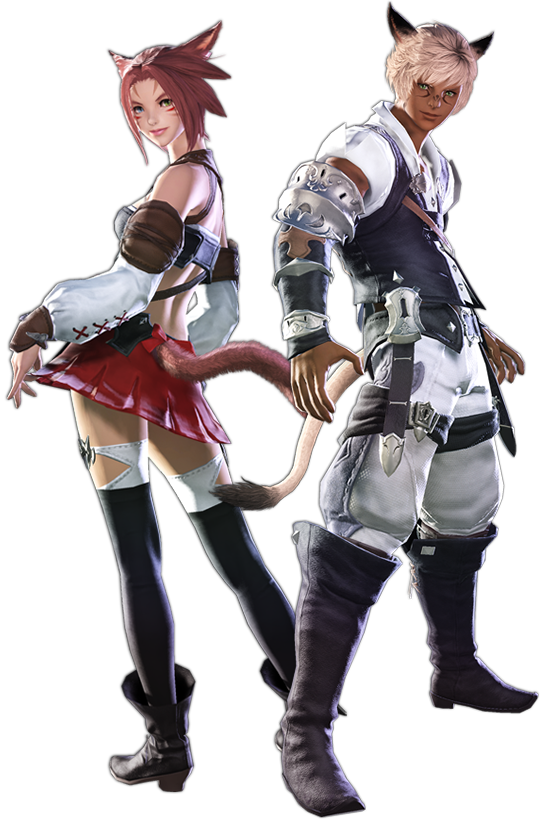
Though their presence in Eorzea is lesser than that of the other races, the Miqo'te are easily distinguished by their large, projecting ears and restless, feline tails. The ancestors of this line first made their way to the realm during the Age of Endless Frost in the Fifth Umbral Era, traversing frozen seas in pursuit of the wildlife upon which they subsisted. Instinctual territoriality causes many among them to lead solitary lifestyles. Males in particular are said to shy from contact with others.
Seeker of the Sun
The Seekers of the Sun are a patriarchal culture, with each tribe centered around a breeding male or nunh, whose duty is to form a harem and lead his people to glory and prosperity. Young males are born and raised as "tia" and must either assume the position of nunh by defeating the existing nunh in single combat or leave the community to form a harem of their own. In larger tribes, multiple nunh may coexist in the same community, although such cases are rare. The majority of Seekers worship Azeyma the Warden.
Keeper of the Moon
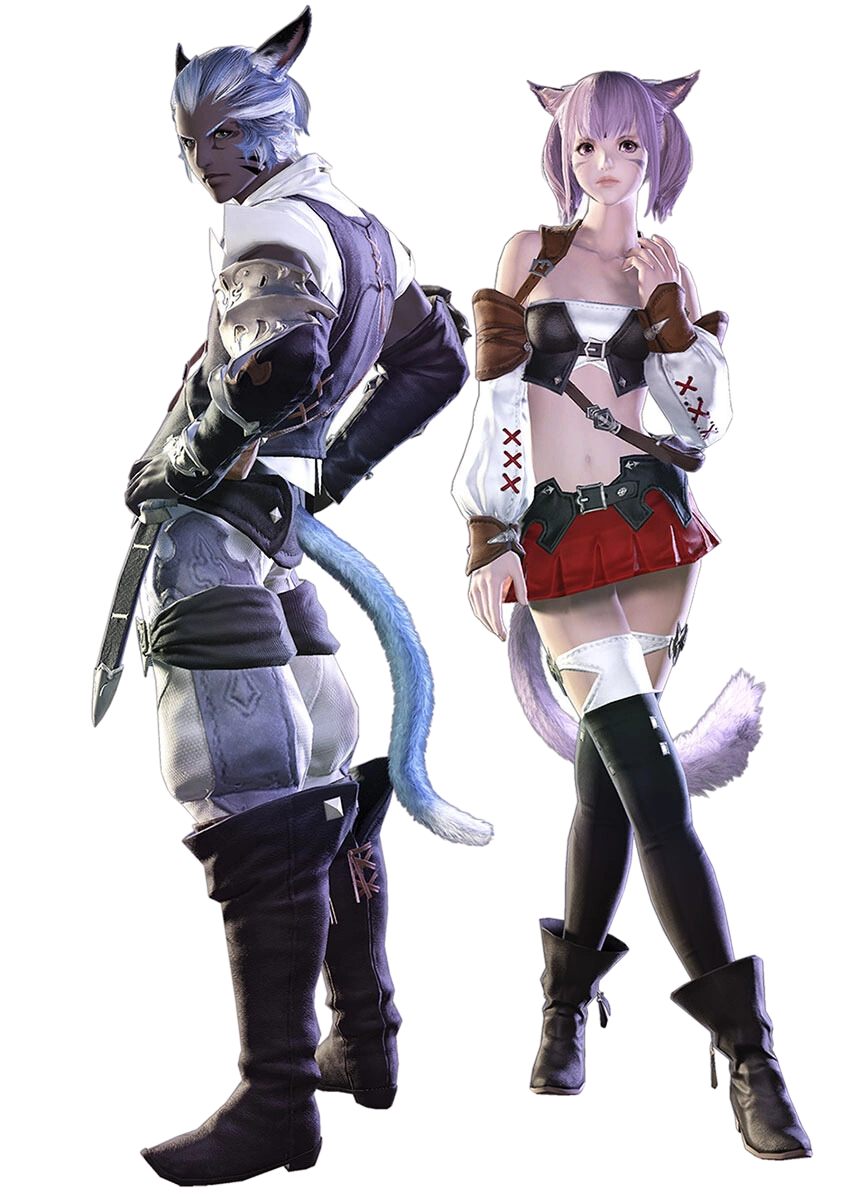
In contrast to the Seekers of the Sun, the family is the fundamental unit of Keeper of the Moon Society. Keeper tribes are often made up of two or three families who hunt together. The males are prone to wandering and the females believe men to be best in small doses. Keepers are often raised without the father, growing up in a more matriarchal society. The Keepers of the Moon have a custom of applying war paint to their faces, a symbolic message to their god that they are prepared to serve as warriors in the afterlife should they fall. It is believed that the vivid colors also grant lunar powers. The Keepers offer their piety to Menphina the Lover.
Roegadyn
The Roegadyn are easily identified by their massive, muscular frames. They are descended from a maritime people that roamed the northern seas, though many of their ancestors turned their longships south to brave the crossing into Eorzean waters. Often considered a barbaric race, the fiercely competitive Roegadyn are also known for their compassion and unswerving loyalty. Many of the greatest warriors in history were born of Roegadyn stock.
Sea Wolves
The Sea Wolves hail from the islands of the far north seas, where they subsist as fishermen and -women. Long ago, no vessel or coastal village was safe from their maritime brand of brutality. Now, it is not uncommon to see them employed as sailors or naval mercenaries on all manner of vessels. In modern times, they make up a substantial portion of the population of Limsa Lominsa, nearly tying with Midlander Hyur as the largest demographic. The city has been substantially influenced by their culture and, in many significant ways, Limsa is a "Sea Wolf town".
Hellsguard
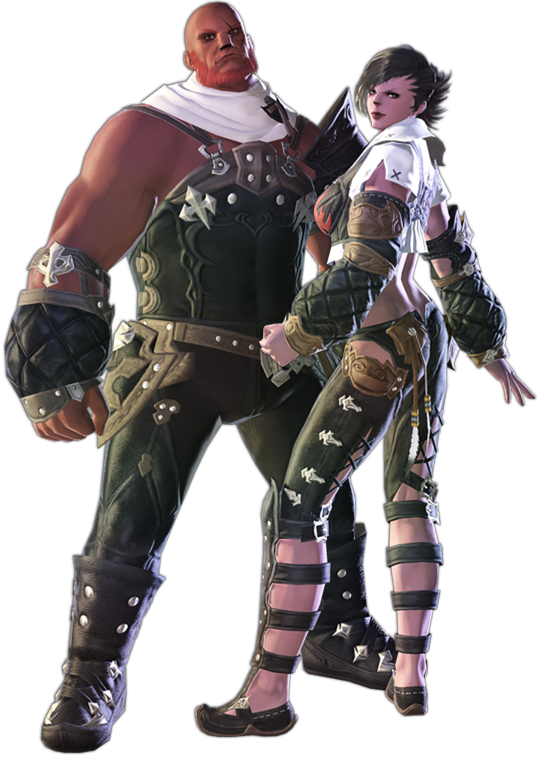
The Hellsguard are a clan of Roegadyn with body and mind tempered by the unforgiving heat of the volcanic regions they inhabit. Believing the mountains of flame to be gates to the underworld, their line has for centuries stood vigil over them to prevent the passage of souls back to the realm of the living. Their sheer girth and steely demeanor open a wide range of paths, from the martial to the monastic. As they hail from the volcanoes of Abalathia's Spine, the Hellsguard have no city to call their own (and many Hellsguard seem to like it that way). If they are to be found in number in any city-state, it is in Ul'dah, where there is no shortage of the sort of sell-sword work that many wandering Hellsguard engage in—and no shortage of coin with which to pay them.